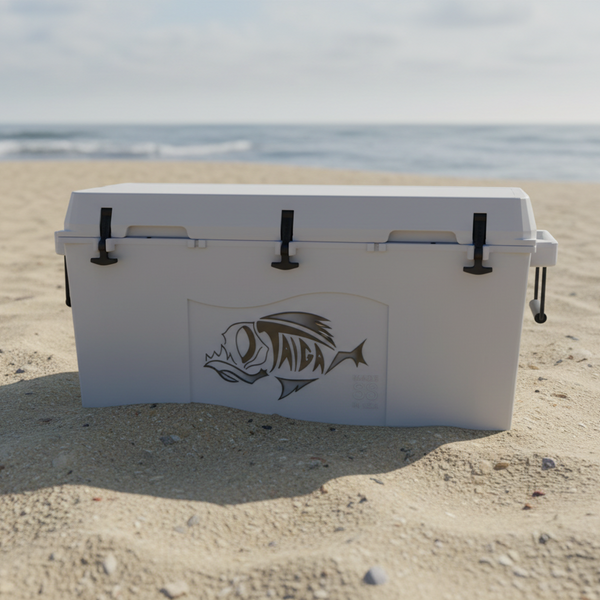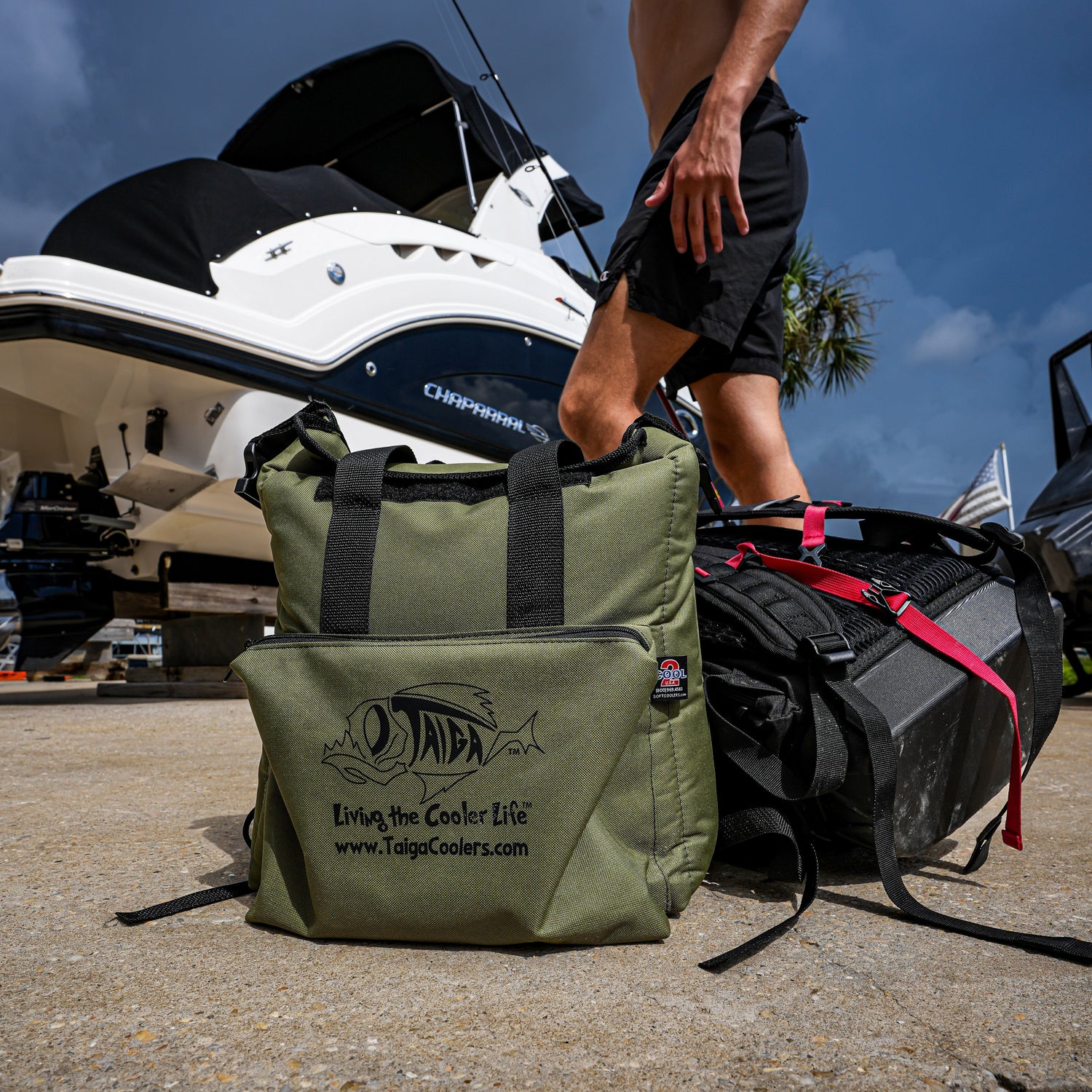

Hard-Sided vs. Soft-Sided: What the Shell Actually Does
A hard-sided cooler uses a rigid plastic shell — rather than fabric or foam — to protect and insulate its contents. Hard-sided coolers hold ice significantly longer, survive rough conditions, and outlast soft-sided alternatives by years. If you're buying a cooler for anything beyond a single-day outing, you want a hard-sided cooler.
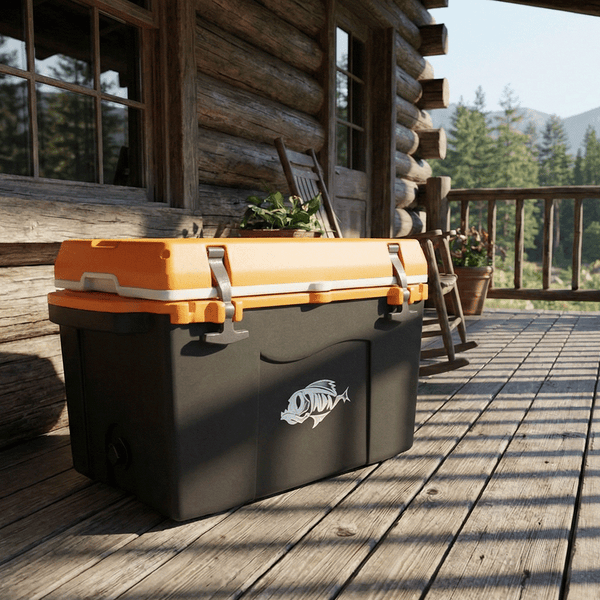
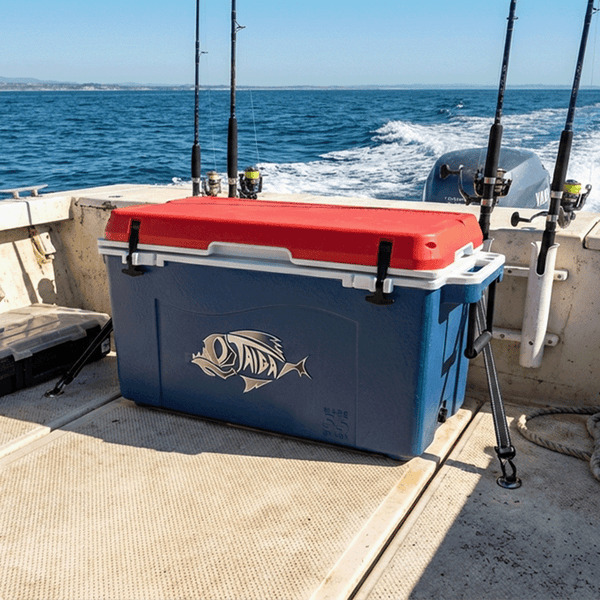
The rigid shell on a hard-sided cooler does two jobs: it protects the insulation inside, and it creates a sealed environment for cold retention. Soft-sided coolers compress under load. When the shell compresses, the foam inside compresses with it — and compressed foam insulates less effectively. Soft-sided coolers are also vulnerable to physical damage: a dog knocks it over, it gets stacked under gear in a truck, a sharp edge punctures the liner. Any of those things permanently compromises performance.
A hard-sided cooler holds its shape under load. The insulation never compresses. The drain plug seals completely. A quality gasket around the lid creates an airtight seal that a zipper cannot match. And that seal is what the ice retention numbers actually depend on.
What Separates Good Hard-Sided Coolers from Great Ones
Walk into any sporting goods store and every hard cooler on the shelf will claim maximum ice retention. Here's what to actually look for:
Insulation thickness. This is the biggest driver of ice retention. Look for at least 2 inches of foam in the walls and 3 inches in the lid. The lid matters most — heat rises and most thermal exchange happens through the top. A thin lid limits your ice life regardless of how thick the walls are. Taiga coolers run up to 3 inches of R5-rated foam in the lid and 2–2.5 inches in the walls.
Gasket material. A freezer-grade rubber gasket is what makes a cooler truly sealed. Cheaper coolers use foam strips or rubber channels that degrade and lose their seal within a season. A proper rubber gasket stays tight for years. Taiga uses the same grade of rubber found in commercial freezer doors.
Shell thickness and material. The plastic should be thick enough not to flex when you push on it. Wall flex creates micromovement at seams and lid joints — that's where cold escapes. Taiga's shell is 3/16" ASTM-tested polypropylene, dense and consistent across the full shell.
Latch design. Latches hold the lid down under pressure and keep the gasket compressed. Cheap latches pop open when the cooler gets stacked or jostled. Quality hard-sided coolers use heavy-duty latches with positive engagement — you hear and feel the seal close.
Drain plug flow rate. A slow drain plug means you have to tilt the cooler to dump meltwater. A high-flow drain plug — like Taiga's — opens fully and drains fast while the cooler stays flat. Small detail with a big practical difference on day four of a hunting trip.
A freezer-grade rubber gasket is what separates a 2-day cooler from a 7-day cooler. Foam strips and zipper seals don't hold. Taiga uses the same gasket material found in commercial walk-in freezers.
How Hard-Sided Coolers Are Built: Why Manufacturing Method Matters
Most hard-sided coolers on the market are built through a casting process where melted plastic coats the inside of a mold. It's a reliable method for producing thick, durable shells used by brands like YETI, Bison, Grizzly, and Pelican.
Taiga uses injection molding. Liquid plastic is injected under high pressure into a precision mold, then cooled rapidly. It's the same manufacturing method used for complex engineering components that require tight tolerances and consistent wall density. The practical differences matter in three ways:
Precision. Injection molding produces tighter dimensional tolerances. Every Taiga cooler comes out of the mold to the same specification — the lid fits the body the same way on unit 1 and unit 1,000. This is what enables Taiga's patented logo process: logos are molded directly into the plastic shell itself, not applied as stickers or decals. The surface consistency of injection molding is what makes that possible at scale.
Wall density. Injecting plastic under high pressure produces a denser wall structure. A denser wall means a structurally stronger shell.
Large-order scalability. Injection molding has faster cycle times. For corporate and bulk orders — 50, 100, 200 units — Taiga can produce and ship on timelines that other manufacturers typically can't match. If you need branded coolers for a job site or corporate event, the production timeline is as important as the product spec.
The Taiga Lineup: Same Build, Three Sizes
Every Taiga hard-sided cooler uses the same specification: 3/16" ASTM-tested injection-molded polypropylene, R5-rated foam insulation (up to 3" in the lid), freezer-grade rubber gasket, anti-microbial interior lining, high-flow drain plug, and hydro-turf traction feet. The differences are size and capacity:
- 27Qt — $199: 23" × 15.5" × 15", holds 24 cans + ice, weighs 17.5 lbs empty. Third-party tested at 45–68 hours ice retention. The go-to size for weekend trips, tailgates, and day use where you want serious performance in a manageable form factor.
- 55Qt — $299: 34.25" × 19" × 17", holds 60 cans + ice, weighs 35 lbs empty. Third-party tested at 70–100 hours. Family camping, longer road trips, 3–5 day outings. Wheel kit sold separately.
- 88Qt — $399: 47" × 21" × 18", holds 96 cans + ice, weighs 51 lbs empty. Third-party tested at 115–170 hours — up to 7 days. Extended hunting trips, week-long camping, situations where restocking isn't an option. Wheel kit sold separately.
Ice retention figures are from The Cooler Zone's independent review — tested outside in Texas heat, opened periodically, at roughly one-third ice fill. Not manufacturer claims.
Third-party tested at 115–170 hours — the Taiga 88Qt holds ice for up to 7 days in Texas heat. Tested outside, opened periodically, with a real ice load. Not a lab result.
Where Hard-Sided Coolers Fall Short
Hard-sided coolers are heavier than soft-sided alternatives. A Taiga 27Qt weighs 17.5 lbs empty — that's not a backpacking cooler. If you're hiking into the backcountry where every ounce matters, a soft-sided insulated bag is the right call. Everywhere else — a truck bed, a boat, a campsite, a job site, a tailgate — the hard-sided cooler wins on every performance dimension that actually matters.

For multi-day use, the performance advantage pays for itself in ice you don't have to buy mid-trip. A quality hard-sided cooler built with thick insulation and a tight gasket will outlast a budget cooler by years or decades — the insulation doesn't compress, the gasket doesn't rot, the shell doesn't crack. Taiga's lifetime warranty reflects the expected lifespan of the product.
Browse all Taiga hard-sided coolers — three sizes, made in Texas, backed by a lifetime warranty. Or get a quote on custom branded units for your team or event.
Ordering 50+ coolers for your company?
Custom branding, PMS color matching, and free renderings included.